At a Glance
Czech Goulash vs. Hungarian Goulash
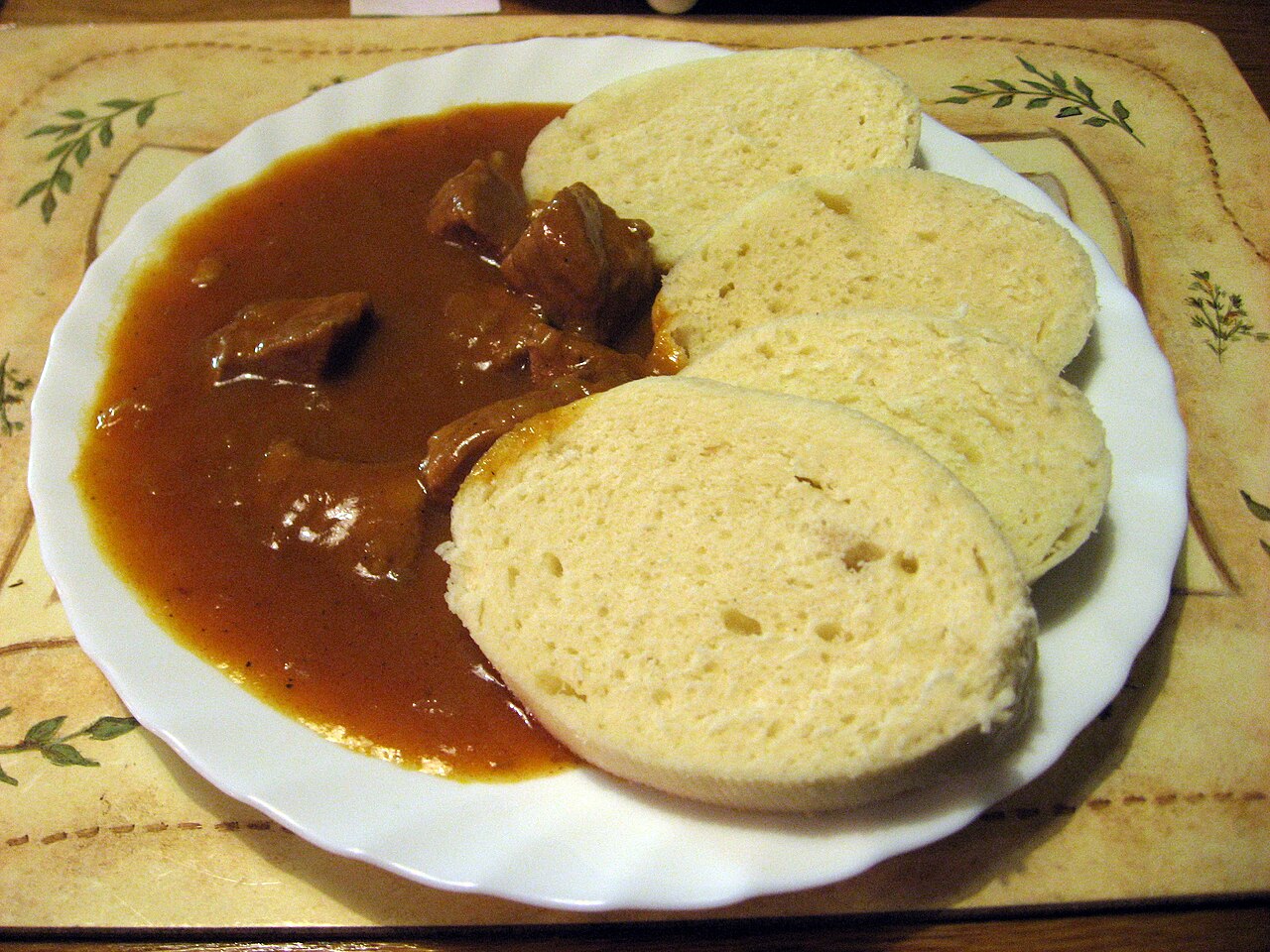
Czech goulash (gulas) and Hungarian goulash share the same Central European ancestry, but they have diverged considerably over the centuries. Hungarian goulash is typically a soup — a thinner, brothier preparation that is eaten as a first course. Czech goulash is a stew, thick and rich, designed to be eaten as a main course with bread dumplings to soak up the sauce.
The Czech version also tends to use more onion relative to the amount of meat, which is what gives the sauce its characteristic body and sweetness. The onions are cooked down until they almost dissolve into the fat, creating a natural thickener that makes flour largely unnecessary.
Another key difference is the use of caraway seeds, which appear in Czech goulash but rarely in Hungarian versions. They add a subtle anise-like note that balances the richness of the paprika and beef fat. For a broader historical perspective, the Wikipedia article on goulash traces the dish's evolution across the region.
Ingredients
- 800 g beef chuck or shin, cut into 3 cm cubes
- 4 large onions, finely diced
- 4 tablespoons lard or sunflower oil
- 3 tablespoons sweet paprika
- 1 teaspoon hot paprika (optional)
- 1 teaspoon caraway seeds
- 3 cloves garlic, minced
- 2 tablespoons tomato puree
- 500 ml beef stock
- 1 tablespoon plain flour (optional, for thickening)
- Salt and black pepper
- Fresh parsley to serve
To Serve
- Bread dumplings (houskovky knedliky), sliced
- Sliced raw onion (traditional garnish)
Method
Building the Base
Heat the lard in a heavy-bottomed casserole over medium heat. Add the onions with a generous pinch of salt and cook slowly, stirring occasionally, for 20 to 25 minutes. The goal is deep caramelization — the onions should turn a rich amber color and reduce to roughly a quarter of their original volume. Do not rush this step; it is the foundation of the sauce.
Add the caraway seeds and garlic, cook for another 2 minutes. Remove the pot from the heat and stir in the paprika. This is important: paprika burns quickly and turns bitter if added to a hot pan over direct heat. Adding it off the heat prevents this.
Browning the Beef
Return the pot to high heat. Add the beef cubes in batches, browning them on all sides before adding the next batch. Crowding the pan causes the meat to steam rather than brown, which affects the final flavor significantly.
Once all the beef is browned and back in the pot, add the tomato puree and stir to coat everything. Cook for 2 minutes, then add the beef stock. The liquid should just barely cover the meat.
Slow Cooking
Bring to a gentle simmer, cover, and cook over low heat for 1.5 to 2 hours. The beef is ready when it is completely tender and beginning to fall apart at the edges. Check occasionally and add a splash of water or stock if the liquid reduces too much.
If you want a thicker sauce, remove the lid for the last 20 minutes of cooking to allow some evaporation. Alternatively, mix a tablespoon of flour with a little cold water and stir it in 10 minutes before the end.
Taste and adjust seasoning. Czech goulash should be deeply savory with a pronounced paprika flavor and a hint of sweetness from the onions.
Serving
Ladle the goulash into deep bowls or onto plates alongside thick slices of bread dumplings. Garnish with fresh parsley and, if you want to be traditional, a few rings of raw onion on top. The raw onion provides a sharp contrast to the richness of the stew.
Tips for Better Goulash
Goulash improves dramatically the next day. If you have time, make it the day before and reheat gently. The flavors meld and deepen overnight in a way that cannot be replicated by cooking longer on the same day.
Use good quality sweet paprika. The paprika is the dominant flavor in this dish, so cheap or old paprika will produce a noticeably inferior result. Hungarian or Spanish paprika from a specialist shop is worth the extra cost.
Lard produces a better result than oil for this recipe. It has a higher smoke point and adds a subtle richness that vegetable oil cannot match. If you prefer not to use lard, beef dripping is a reasonable substitute.
For more on Czech food culture and regional variations, the Czech Tourism food guide covers the country's culinary geography in useful detail.